When the Taliban reseized power in Afghanistan in 2021, many of the country’s best female cricketers fled the country in fear for their lives. Since then, following a brutal crackdown on women’s rights, girls have continued to play cricket in secret, in defiance of the regime and the risks.
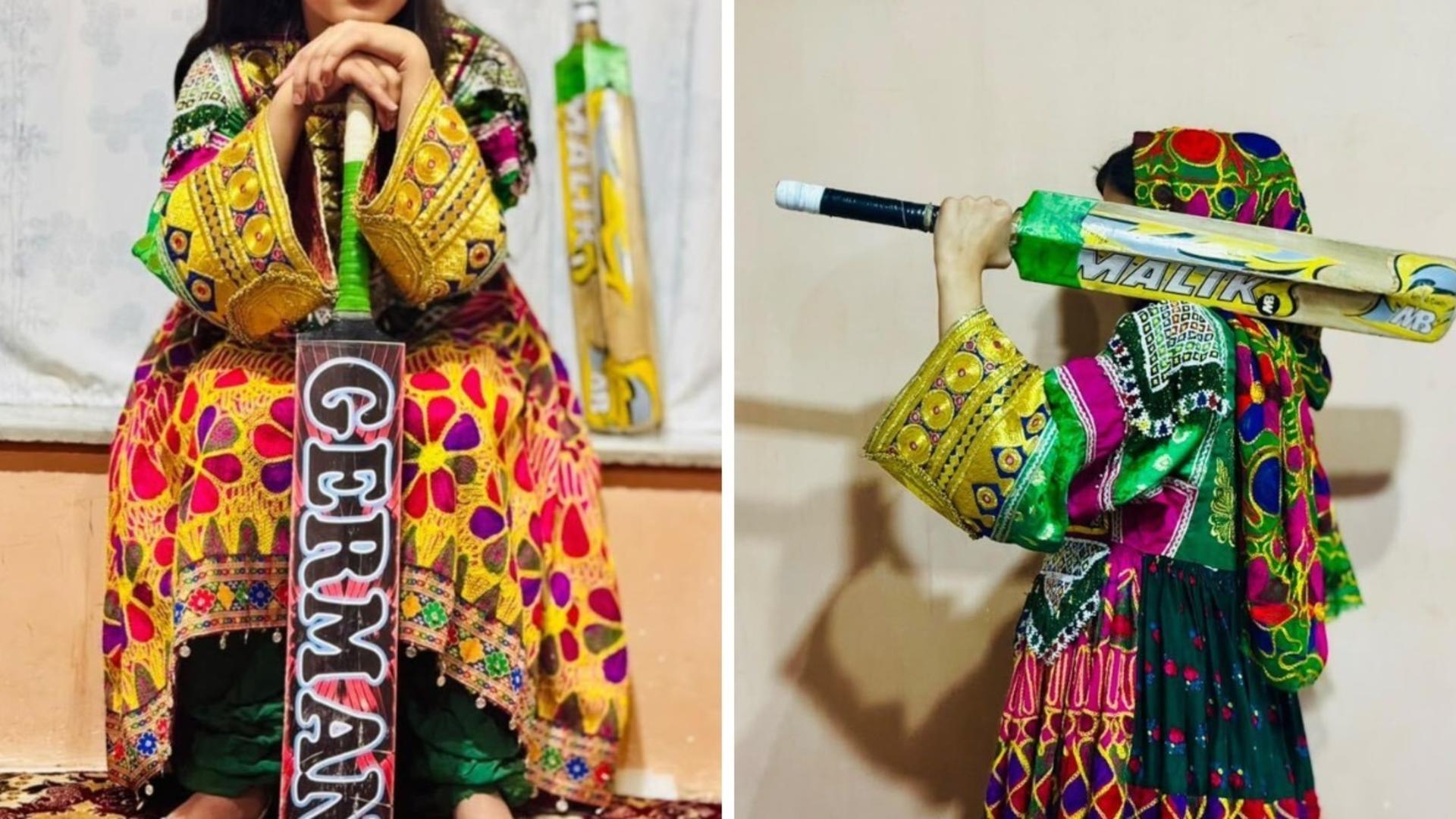
In the small yard of her family home, Zahra* grips her cricket bat tightly. Her younger brother is about to bowl at her. Every day, after finishing her schoolwork and chores, Zahra and her brother head to the yard to practise. Sometimes they are joined by their other siblings. In these moments, in this enclosed space, Zahra can forget the world and just play the ball. But outside of these walls, what she’s doing is illegal.
“Cricket is more than just a sport to me,” she tells Wisden. “It is my dream, my hope, and a reason to keep believing in my future.”
Since the Taliban claimed back control of Afghanistan, women have been barred from participating in all sports, and banned from entering public gyms and parks. Most members of the national women’s cricket team, which had only been established in 2020, fled the country in fear of their lives following the regime change in 2021.
Zahra’s passion for cricket remains unbreakable. “I constantly watch cricket videos and matches,” she says. “I always try to finish my household chores before the match starts, because I do not want to miss it. While watching, I carefully focus on the players' batting and bowling techniques. Sometimes, I even try to learn and practise the deliveries I see them bowl.”
Over the last five years, the Taliban government has systematically erased human rights for women and girls in Afghanistan. According to a UN report in August, the Taliban have issued more than 100 decrees targeting women and girls, including banning girls over the age of 12 from attending school. Restrictions on employment, justice and healthcare have in many areas erased women from public life, leading to shorter life expectancy, and higher risk of gender-based violence.
“Sometimes, I feel deeply discouraged when I think about how much time is passing and how little freedom I have to develop my abilities,” says Zahra. “I worry about my future, my education, and whether I will ever have the chance to show what I can do. I do not want these years of effort, hope, and determination to pass without ever getting the opportunity to play.
“I honestly do not personally know any girls who are in the same situation as me and continue practising cricket. However, I hope there are other Afghan girls who still hold on to their cricket dreams, just as I do.”
Zahra isn’t alone. About 100 miles away from where she lives, in Kabul, a group of girls are playing cricket in the yard in their apartment complex, shielded from the threats of the outside world.
“We can’t really go out alone,” says 16-year-old Amina*. “So we spend our time mostly alone in the building area… We girls, all of my friends, we all go and play cricket, volleyball and football, we usually do that when we have free time.
“I have a friend who really loves cricket. I can tell you she is the best bowler among us. Her older brothers all like cricket. They all play so she learned from them.”
Though the girls practise cricket in secret, learning from their older brothers and from each other, Amina wants to train more openly. “I like both [batting and bowling], but mostly I like batting, power-hitting!” she says. “I would like to have a teacher teaching me, but I can’t.”
Asked what she would do if she had access to coaches, Amina says: “I would probably sign up for the national team.”
***********
The Afghanistan men’s cricket team has been one of the great sporting stories of the century. Led by a core of world-class talents like Rashid Khan and veteran Mohammad Nabi, since becoming a Full Member of the ICC in 2017 they have notched up a string of memorable victories. They reached the semi-finals of the 2024 T20 World Cup, and registered landmark wins over England in both the 2023 50-over World Cup and 2025 Champions Trophy. In the last five years, Afghanistan have evolved from a developing team to an established Full Member, with a seat at the ICC’s top table.
Those victories have been inspirational not only to the boys who have the chance to one day emulate them, but to Afghan girls as well. Zahra lists Rashid Khan, Ibrahim Zadran, Rahmat Shah and Chris Gayle as her favourite players. “[They] inspire me to keep going even when the road ahead seems impossible.”
Gayle is a folk hero in Afghanistan; he played in the first edition of the Afghanistan Premier League in 2018, and before that he famously danced with Afghanistan players after they beat West Indies for the first time in the 2016 T20 World Cup.
The Taliban’s subsequent return to power has complicated Afghanistan’s position in the international system. The ICC’s rules require Full Member nations to have a national women’s team, which Afghanistan hasn’t had since 2021. The ICC so far has turned a blind eye to this. Meanwhile, both the ECB and Cricket Australia have announced that they will not play Afghanistan in bilateral series, but have continued to play them in ICC tournaments.
As a Full Member of the ICC, the Afghanistan Cricket Board (ACB) received $16.82 million in the 2024-2027 funding cycle. The former members of the Afghanistan women’s team, many of whom now reside in Australia, have written to the ICC on several occasions asking for their share of that funding, in order to finance their efforts to continue to play and train in exile.
In 2025 the ICC belatedly announced an initiative to support the team, and extended their funding following their board meeting earlier this year. However, they have still not established a pathway for the team to participate in international tournaments, nor do they recognise them as the official Afghanistan women’s team.
The question of the international cricket community’s stance towards Afghanistan was recently raised again when a number of English players signed up to participate in the re-launched Afghanistan Premier League (APL). Eight were later bought in the auction: Moeen Ali, Alex Hales, Joe Clarke, Tymal Mills, Olly Stone, Luke Wood, Tom Moores and Chris Wood (none of whom are centrally contracted by the ECB). In response, Labour MP Tonia Antoniazzi, who led calls for the ECB to boycott their match against Afghanistan in the 2025 Champions Trophy, told BBC Sport: “I hope the ICC refuses to sanction this event. Continuing to allow Afghanistan Full Member status makes a mockery of its own membership criteria.”
The boycott debate is complicated. Cricket is Afghanistan’s most popular sport, and their men’s team is the source of significant national pride. Samira Sayed Rahman, a humanitarian worker, and former government employee under the previous regime who lives in Kabul, highlights this. “I’ve travelled to some of the most remote parts of Afghanistan, and you see children playing cricket with sticks, with makeshift balls, often in places where there is very little else,” she says. “Yet it’s incredible, they know these players, they talk about them, they find ways to watch the match or listen to it on the radio.
“Women I know gather around the TV and they watch these players play and they know the names. It’s one of those very rare things where you see all aspects of Afghan society come together and be interested in it.”
However, there’s no escaping the fact that playing cricket in the street is now dangerous for half of Afghanistan’s children. Amina says she used to play street cricket with her friends before the Taliban came back into power. Asked what would happen to her if she did that now, she says: “I would get taken away, maybe they would talk to my dad, they would tell him to not let me do it again. My dad would also probably get locked up for a night.”
Zahra has experienced the dangers of publicly showing her love of playing cricket. “About two or three months ago, I posted a photo on social media of myself practicing cricket at home,” she says. “I also wrote a message about my dreams and hopes for the future. After that, someone sent me a message and when I opened it, I read a frightening warning telling me not to post anything about cricket again.
“I was terrified because they appeared to be a military person. The words they used made me fear that I might not be allowed to live my life safely. That day, I was afraid of hearing someone knock at the door because I was worried that the person who had threatened me might be there. I did not even tell my family what had happened because I was scared that they might stop me from playing cricket out of concern for my safety.”
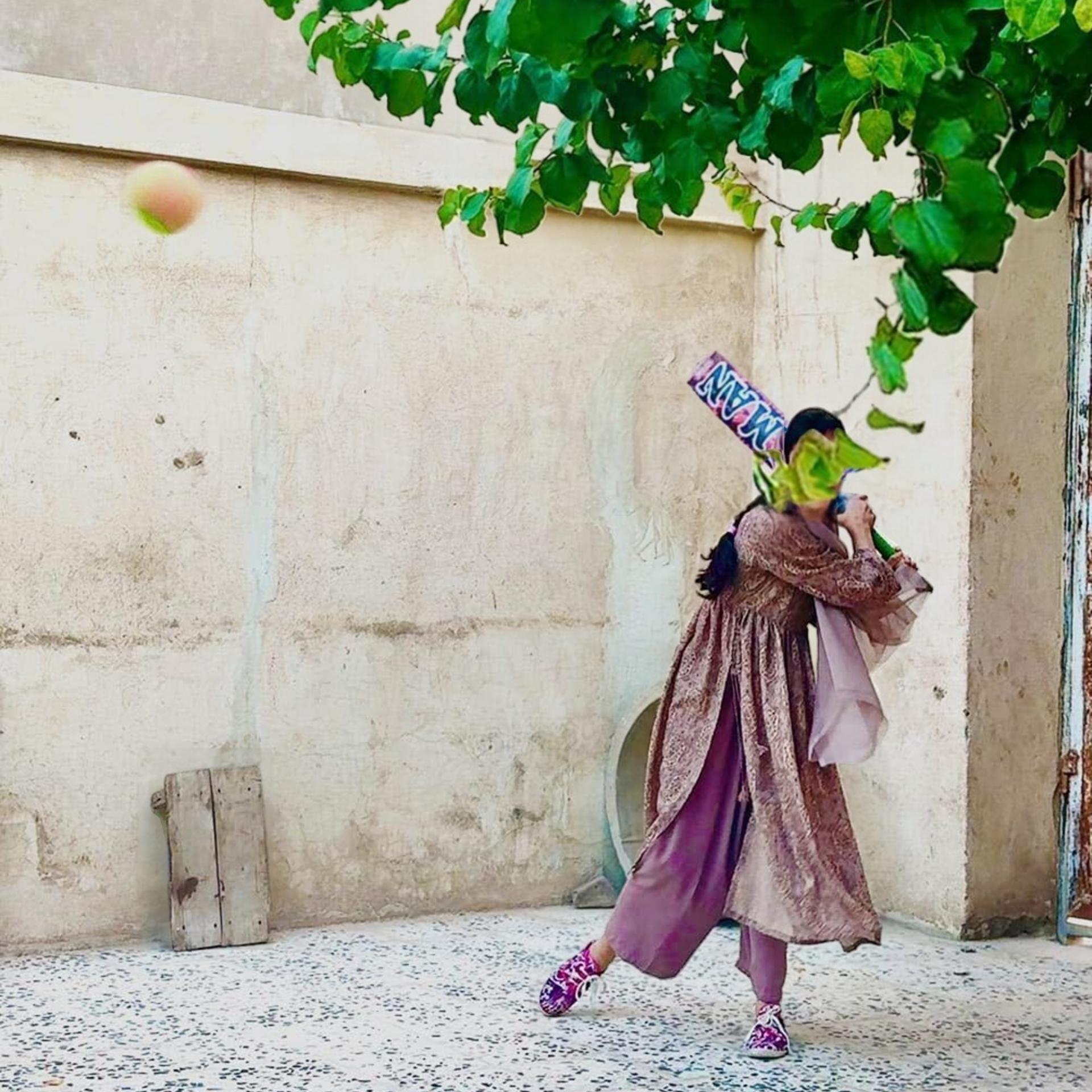
As both Zahra and Amina point out, the risks they take by playing cricket also extend to their families. In every country, parents make sacrifices to allow their children to pursue their passions – taxiing them to matches, buying equipment and washing kit. Zahra and Amina’s parents have to weigh up something far greater. Do they allow their children to follow their dreams, or prioritise their safety from a brutal and unforgiving regime?
“My mother was also very passionate about cricket before she got married,” says Zahra. “She understands my love for the game, and she always encourages me to continue following my dream. She supports me and tries her best to help me whenever she can.
“My father also always encourages me and makes me feel stronger. Whenever he watches a cricket video, he shares it with me, praises me, and motivates me to keep going. Having my parents' support means so much to me, especially when life in Afghanistan feels difficult.”
***********
Given the scale of the human rights abuses that women in Afghanistan face, their exclusion from cricket may seem insignificant – small fry compared to being unable to go to school or, in many regions, access healthcare. But, as Samira says, cricket is part of the removal of women from Afghan identity.
“The meaningful participation of women and girls in society includes their ability to access education,” she says. “It includes their ability to access financial and economic opportunities. But it also includes their ability to play sports. All of this comes part and parcel when we talk about the restrictions that women and girls face in Afghanistan.
“As an Afghan woman who lives and works in Afghanistan, I think it’s important that we talk about what Afghan women are denied, but at the same time who Afghan women are. If the only stories that we tell of Afghan women are of them suffering, then we’re just reducing them to victimhood rather than recognising their full humanity and their capabilities and their ambitions.”
Both Amina and Zahra’s ambitions depend on being able to leave Afghanistan. Amina’s family fled to a safe country when the Taliban came back into power, but returned two years later. Both her parents are doctors, and amid the healthcare crisis in Afghanistan, they wanted to help. Amina hopes to study in England one day, where she already has relatives.
Zahra’s path out of Afghanistan is more difficult. “I wish people could understand what it feels like to be a young girl with a dream, a cricket bat in her hands, and so many closed doors in front of her,” she says. “I do not want special treatment. I simply want a fair chance to learn, train, grow, and work towards my future.
“I only want to pursue my dream, continue my education, and have the opportunity to train and play cricket in a safe environment.”
*Names have been changed to protect identities
Follow Wisden for all cricket updates, including live scores, match stats, quizzes and more. Stay up to date with the latest cricket news, player updates, team standings, match highlights, video analysis and live match odds.